Planned maintenance protects production continuity by preventing unexpected breakdowns and lowers the total cost of ownership. A sound maintenance strategy is an invisible investment that directly affects a company’s competitiveness.
1. Moving from Breakdown Maintenance to Planned Maintenance
A reactive maintenance approach that intervenes only when a breakdown occurs is the most expensive method in the long run. Planned, periodic maintenance solves small problems before they turn into major failures.
2. Periodic Maintenance Plan
Checking equipment at intervals recommended by the manufacturer and carrying out lubrication, seal replacement and adjustments on time significantly extends service life.
3. Use of Genuine Spare Parts
Genuine, quality spare parts extend equipment life and reduce the risk of recurring failures. Incompatible parts may look cheap in the short term but increase costs in the long run.
4. Predictive Maintenance
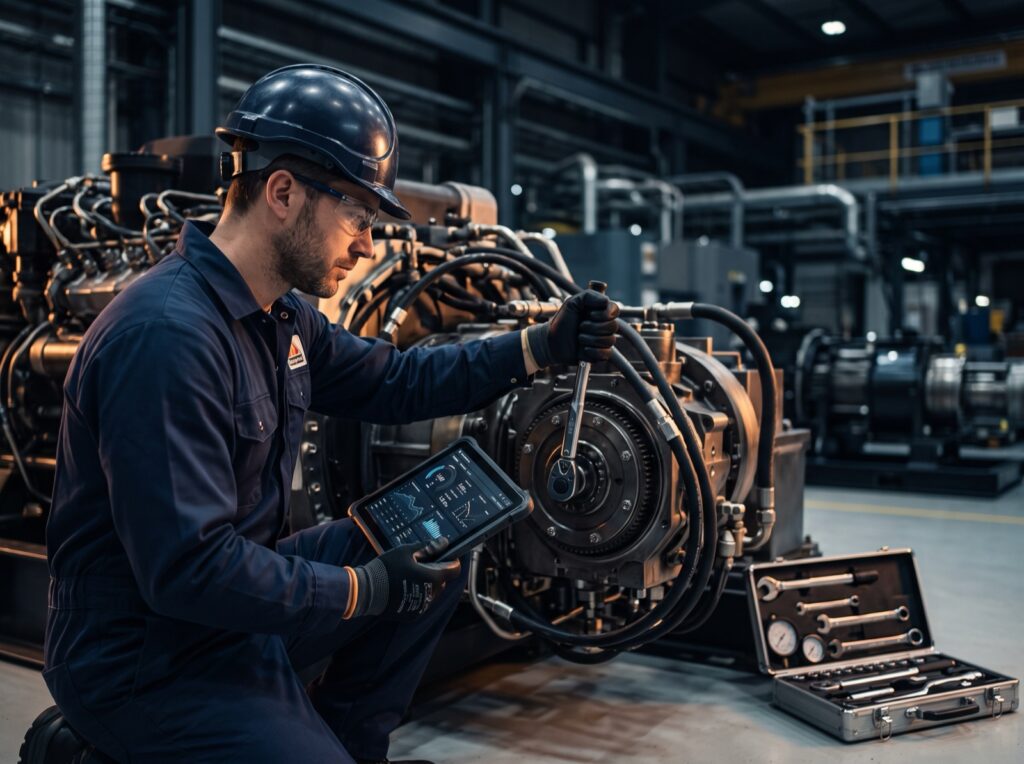
Methods such as vibration analysis, thermal imaging and oil analysis can detect faults before they occur. This proactive approach minimises unplanned downtime.
5. Spare Parts and Stock Management
Keeping critical parts in stock shortens waiting time when a breakdown occurs. A strong supply network provides fast access to the right part.
Every unit of cost spent on maintenance is far below the losses caused by unplanned downtime.
Conclusion
The combination of planned maintenance, genuine parts and predictive methods reduces costs and secures production. We keep your production uninterrupted with our after-sales service and spare part support.